Canadian securities class actions have grown in size and relevance over the past decade. While the absolute settlement figures are often smaller than in the U.S., their impact on companies — particularly mid-cap growth names — can be just as significant.
In many cases, litigation follows moments of peak optimism: aggressive acquisitions, IPO expansions, or bold forward guidance. When expectations reset, the share price decline is usually far larger than the settlement itself.
Below are several prime Canadian securities class action examples and how each case influenced the company's trajectory.
Aphria
Aphria (Tilray Brands) (NASDAQ:TLRY) reached one of the largest Canadian securities class action settlements in recent years, agreeing to pay CAD $30 million to resolve claims related to its 2018 acquisitions of Nuuvera and LATAM Holdings. Investors alleged that the assets were significantly overvalued and that key information about their true financial condition had not been adequately disclosed.
The controversy ultimately contributed to a major leadership shake-up and significant reputational damage. Aphria later merged with Tilray in 2021, creating what is now Tilray Brands, one of the largest global cannabis companies.
Despite the strategic merger, the combined company's stock has struggled to regain earlier valuations seen during the peak of the cannabis boom.

Tilray shares remain highly volatile, reflecting broader uncertainty across the cannabis sector as companies work to stabilize margins and adapt to slower-than-expected market expansion. Analysts remain divided on the long-term outlook, with some highlighting international expansion opportunities while others point to continued pressure on profitability.
Lightspeed Commerce
Lightspeed Commerce (NYSE:LSPD) agreed to an CAD $11 million settlement after a short-seller report questioned the accuracy of the company's reported customer metrics and revenue disclosures. The report triggered a sharp selloff and raised concerns about the sustainability of the company's growth narrative.
Although Lightspeed denied wrongdoing, the stock fell sharply following the report and remains well below its pandemic-era highs.
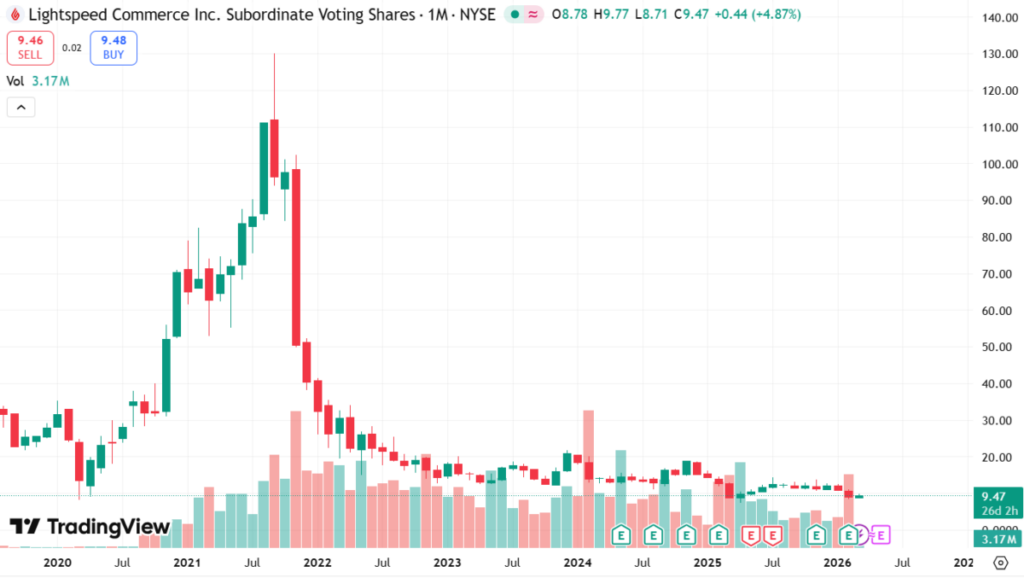
In recent earnings updates, the company has reported improvements in gross margins and operating cash flow while raising its fiscal revenue outlook. However, profitability remains a key concern for investors. Analysts generally maintain neutral to moderately positive ratings on the stock, but market sentiment continues to hinge on Lightspeed's ability to transition from rapid growth to consistent profitability.
Ithaca Energy
Ithaca Energy (LON: ITH) reached a CAD $9 million settlement after investors alleged that the company failed to adequately disclose operational challenges during its public listing process. The central issue involved delays at the FPF-1 production facility, which later affected production expectations and triggered a decline in the share price.
Unlike many technology-driven litigation cases, Ithaca's long-term stock performance has been influenced more heavily by energy market dynamics than by the lawsuit itself. The company operates in the North Sea oil market, meaning that commodity price fluctuations and production updates remain the primary drivers of investor sentiment.

Recent analyst commentary has focused largely on oil price assumptions, capital allocation strategy, and dividend sustainability rather than past legal issues. As a result, the litigation now reprConclusion
While settlements often represent the final stage of securities litigation, the financial penalties themselves rarely tell the full story. In many of these cases, the market reaction — reflected in long-term stock performance, strategic restructuring, and leadership changes — has proven far more significant than the legal payouts.
From cannabis companies navigating sector downturns to technology firms adjusting to profitability pressures and energy producers facing operational risks, these cases illustrate how quickly investor expectations can shift when disclosure issues emerge. For public companies, maintaining transparency during periods of rapid growth or operational change remains one of the most important safeguards for long-term investor confidence.
Trevali Mining
Trevali Mining agreed to a CAD $2.8 million settlement after a tragic flooding accident at its Burkina Faso mine in 2022 that resulted in multiple fatalities. The incident drew international attention and criticism over safety practices and disclosure standards.
The disaster triggered a dramatic collapse in the company's stock price and ultimately led to severe financial distress. Trevali later entered creditor protection proceedings as it attempted to restructure its obligations.
Today, the company's securities no longer attract meaningful analyst coverage, and the remaining developments surrounding the business largely revolve around restructuring and asset management rather than operational growth. The case remains a stark reminder of how operational failures can rapidly translate into both market and legal consequences.
Conclusion
While settlements often represent the final stage of securities litigation, the financial penalties themselves rarely tell the full story. From cannabis companies navigating sector downturns to technology firms adjusting to profitability pressures and energy producers facing operational risks, these cases illustrate how quickly investor expectations can shift when disclosure issues emerge.
Benzinga Disclaimer: This article is from an unpaid external contributor. It does not represent Benzinga’s reporting and has not been edited for content or accuracy.
Login to comment