Something happened last week that was buried under all the other headlines: Facebook owner META’s stock jumped 10.5% in just five days.
That’s a big move, especially with all the negative press the company’s been getting lately.
In fact, most traders saw the move and brushed it off as another tech-stock bounce. But this move wasn’t random.
It wasn’t just a reaction to one headline, one analyst upgrade, or one short-term news cycle.
It was part of a much bigger pattern — one that’s been showing up in META again and again during this same seasonal window.
And all the data suggests META’s run is just getting started.
Here’s why.


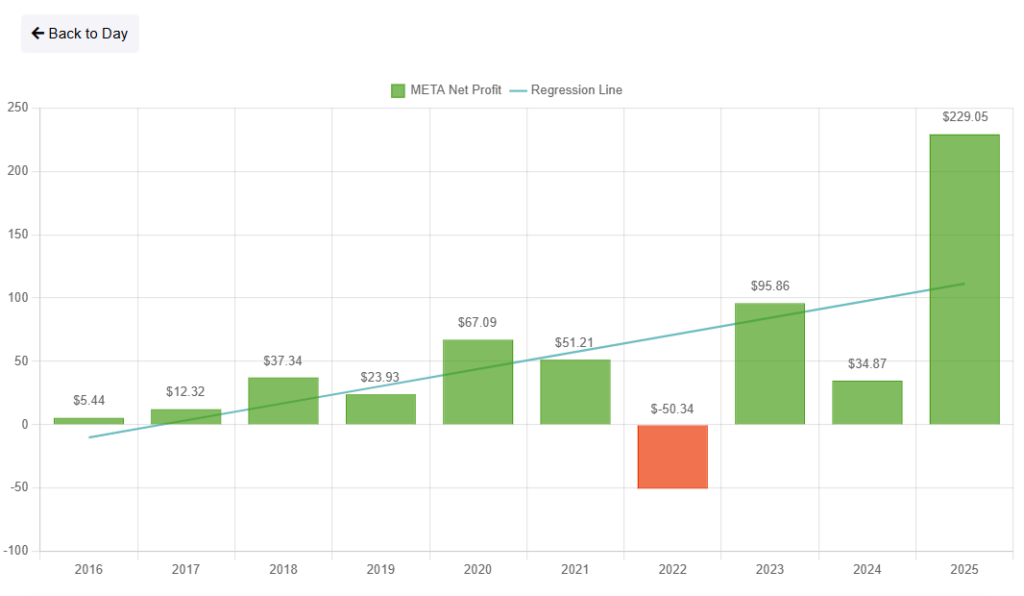
Going back to 2016, Meta Platforms Inc. (NASDAQ:META) has often made meaningful moves higher from mid-April into early July:
- In 2016, it climbed about 6.7% during that window.
- In 2017, it gained roughly 5.7%.
- In 2018, it jumped more than 20%.
- In 2019, it gained about 10%.
- And in 2020, it exploded higher by more than 36%.
Yes, 2022 was the outlier: META fell during that bear market year.
But look at the last three years: META gained about 35% during this same spring-to-summer window in 2023, around 6% in 2024, and roughly 36% last year.
That’s why I had META on my radar before last week’s move even happened.
At the time, the chart didn’t look perfect. In fact, it had been showing a lower-high, lower-low type of setup — the kind of thing that can scare a lot of traders away. But that’s exactly why the pattern mattered.
Because while the headlines were noisy, and while a lot of people were focused on everything going wrong with the company, the seasonal setup was flashing every signal it could.
And then META started to move.
Last week, shares were trading around the $638 area. A few sessions later, META pushed toward $690. That means the stock made about half of the 60-day move I was expecting—in just five trading days.
That’s not normal.
And when a stock makes that kind of move that quickly (especially inside a seasonal pattern that already has a history of working), you don’t just ignore it.
You ask the next logical question: Is the move over—or is it just getting started?
And right now, I believe META may still have room to run, because that same pattern that’s happened 90% of the time over the last decade doesn’t end after five days.
Historically, this setup runs from mid-April into early July. So even after META’s sharp 10% jump, there may still be time left in the window.

Now does that mean you should go chasing after the stock blindly? Absolutely not.
And it definitely doesn’t mean you should take unlimited risk, either.
But it does mean META could still be a candidate for another defined-risk bullish setup — especially if the stock continues to hold strength and work toward the next upside area.
And in this case, I’m watching the possibility of META pushing toward the $730 area. After a move from the low $600s toward $690, a push toward $730 would keep the current seasonal move alive without requiring anything outrageous from the stock.
The Fed Held Rates. Oil Stayed Elevated. Here's How to Trade It.
The Fed held rates steady, but the market still has to figure out what that means for inflation, growth, and what comes next. Oil remains elevated, and volatility is already picking up across sectors. This is where new setups start to form. On Sunday, May 3, Matt Maley goes live to show you how he's positioning for the week ahead and what he's watching before the open. Reserve Your Free Spot
The Right Way to Trade META’s Seasonal Bull Pattern
For me, this is where options can make sense — specifically, a call debit spread.
A call debit spread is a bullish options strategy where you buy one call option and sell another call option at a higher strike price. The goal is to participate in upside while keeping the risk defined from the start.
That matters because META is not a cheap stock. Buying shares outright can require a lot of capital. Buying straight calls can also get expensive, especially after a big move when options premiums may already be higher.
A call debit spread can help reduce the cost of entry while defining the maximum risk before the trade is ever placed.
For example, if I’m looking for META to continue toward the $730 area, I may look at a spread that targets that zone rather than simply buying calls and hoping for the best.
The key is not just finding the trade. The key is planning it.
And before opening any trade, I want to know:
- Where the stock is now
- Where the pattern suggests it could go
- How much time is left in the seasonal window
- How much I’m willing to risk
- And where I’d take profits if the move happens faster than expected.
That last question is important. Because when a stock makes half of its expected move in just a few days, you don’t want to get greedy. You want to manage the trade.
Sometimes that means taking a win early. Sometimes it means reducing exposure. Sometimes it means looking for a fresh setup with lower cost and lower risk instead of trying to squeeze every last penny out of the original move.
That’s the real lesson here.
META’s move may have looked "quiet” because it got buried under all the other market headlines. But a 10.5% move in five days is not quiet—it’s a signal.
That’s exactly why META is still on my radar right now. Not because of the headlines. Not because of the hype. But because the pattern is still in play.
And if META continues to follow through, as I expect, you’ve got another opportunity to capture profits.
Login to comment