
The SpaceX IPO lockup structure is unlike anything investors have seen before and the debut of SpaceX (NASDAQ:SPCX) that we saw on June 12 made history for the whole market. The price for the share was $135 and it is officially the biggest IPO in history, raising around $75 billion and the valuation of the company was ~$1.8 trillion and right now market cap has crossed $2.9 trillion (June 16th).
Shares closed Day One up 19% at $161.11 and the ATH was $225.64. For investors thinking beyond the first weeks of a bullish mood, it is very important to separate 3 things:
- What happened on the first day
- What’s going to happen in 6 months
- What this IPO tells us about the broader market coming in 2027

My point is that this is likely to go higher in the short term, as the index inclusion and oversubscription can fuel the whole company. But across the 2026 mega-IPO wave (especially in AI sector), looks like the market absorbing a huge amount of retail liquidity at the worst possible time for us.
I'm bearish on the 12-18 month horizon, but have a specific window from late 2026 till early 2027 when I expect the setup to change into the correction phase.
There is No Surprise with the Price Action
The SpaceX IPO lockup aside, the deal was oversubscribed with around 2x, with ~$150 billion in orders and $75 billion in available shares, against a float of approximately 4%. The 19% pump on a 4% float with a big oversubscription is the supply and demand that we have an the artificially made asset.
With a small amount of shares available in the market compared to demand, almost any price change on the first day of trading has more to do with positioning than fundamentals.
SpaceX was added to MSCI World and MSCI ACWI the day after listing. That’s an unusually fast inclusion. If it qualifies for fast-track Nasdaq-100 inclusion under the new rules (allowing inclusion in 15 trading days instead of three months), passive funds may be forced to invest without looking into valuation.
None of this tells you anything about whether SpaceX is worth $1.8 trillion, $2.5 trillion, or $800 billion. This information tells you that the float is tiny and the buyers could be mechanical.
In my opinion, this is a setup for continued upward move in the short term and a setup for the correction when this mechanical bid will disappear or reverse.
SpaceX IPO Lockup Calendar: What Most Investors Miss
SpaceX IPO structure gets really unusual in this case and I think that most investors have not done their homework on this exact point.
Most IPOs use a flat 180-day lockup. SpaceX is different. Insiders can sell up to 20% of their holdings on the second full trading day after Q2 2026 earnings are published — not on the earnings date itself. SpaceX Is expected to report Q2 earnings on September 2.
A separate 10% tranche unlocks if SPCX closes at least 30% above its $135 IPO price — above $175.50 — for at least five of the ten trading sessions at that point. Trading above that level today does not trigger it.
The standard 180-day lockup then expires around mid-December 2026. Elon and major shareholders stay locked until ~June 2027, with early release triggers tied directly to stock performance.
What History Says About SpaceX IPO Lockup Expirations
The history of this pattern does not make me bullish, here are pretty similar situations:
- Palantir (NYSE:PLTR) ran from ~$10 to near $40 between its 2020 listing and February 2021. For this case, when the lockup expired, insiders like Peter Thiel sold tens of millions of shares. After that stock corrected 6% in a single session.
- Rivian (NASDAQ: RIVN) fell about 20% in one day when Ford (NYSE:F) disclosed a stake sale at the 180-day mark.
- Uber (NYSE:UBER) hit ATL on its own lockup expiration day, corrected to 40% from IPO price.
- Snowflake (NYSE:SNOW), with a phased schedule designed to soften the sell pressure, still dropped ~13% on its final expiration week.
Market rules almost everywhere show that the higher the speculative premium built into an IPO, the more painful correction will be when the supply increases.
SpaceX priced at a significant premium. That premium assumes near-perfect execution across Starlink, Starship, and xAI.
Wide Dispersion and Early Days
Analyst price targets after a 19% first-day pump mean little. Trading history is too short to model accurately. The average 12-month target is around $164, just above the current price (estimates ranging from $63 to $227).
Some are even more bullish, for example Jim Cramer saw a potential $5 trillion market cap, which is ~170% upside from the IPO price. This price discrepancy represents an overvaluation of the private company, which analysts had limited time to model.
What the S-1 Actually Tells Us About SpaceX’s Business
Useful sell-side coverage typically arrives 25–40 days after an IPO. Until then, targets reflect narrative, not valuation.
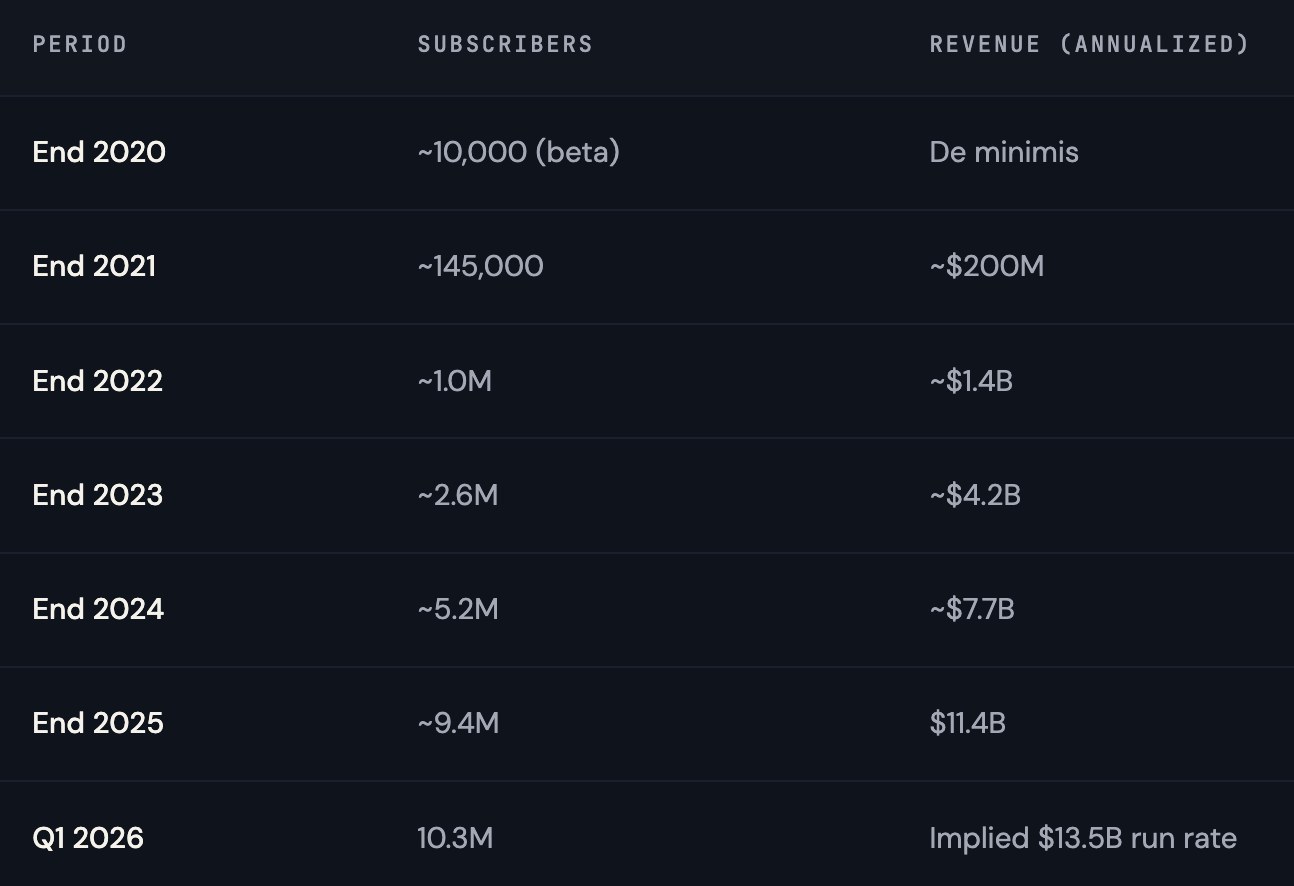
What the S-1 made clear, and what matters far more than Day One trading, is that Starlink made $11.4 billion in revenue in 2025, with $4.4 billion in operating profit and 63% adjusted EBITDA margins.
Subscribers more than doubled in a single year, from 4.4 million to 10.3 million. And that is the real business. At the same time everything else (Starship launch, new xAI division, a $1.25B/month compute-leasing deal with Anthropic at the xAI Colossus data center) is upside on top of an already solid satellite company. The market, however, pricing it like a pure AI game.
How This Compares to Other Huge IPOs
The SpaceX IPO lockup dynamic isn’t an isolated event — it’s the opening act of a supercycle, for me it looks like the opening act in the most concentrated IPO supercycle in market history. OpenAI is targeting a listing with $852 billion valuation, Anthropic is planning the valuation over $965 billion. Combined, these three offerings could exceed $200 billion in proceeds. All within a six-month window.
For the context: global IPO proceeds in Q1 2026 alone reached $42.6 billion, this is a 45% year-over-year increase even as the number of deals fell 15%. A few but much more larger deals will be converging on the same liquidity pool, in the same several months.
The bull case for absorption is that there's ~$8 trillion in US money market funds, and SpaceX's $75 billion raise is just ~1% of that pool. The broader argument is that institutions have been getting AI exposure through proxies, like Nvidia (NASDAQ:NVDA) for chips, Microsoft (NASDAQ:MSFT) for its OpenAI stake, Alphabet (NASDAQ:GOOGL) for Anthropic).
| Company | Expected Valuation | Expected Proceeds | Timeline |
| SpaceX | ~$1.8T | ~$75B | June 2026 |
| OpenAI | ~$1T | ~$60B+ | Q4 2026 |
| Anthropic | ~$965B | TBD | October 2026 |
That said, I'm skeptical. Money market balances are largely tied to specific mandates, and realistically, a lot of any rotation into SPCX, OpenAI, or Anthropic comes straight out of existing equity positions.
More than 600 current and former OpenAI employees have sold $6.6 billion in stock through secondary markets. The IPO hasn’t even happened yet.
The Tokenized Stock Failure
In the run-up to the IPO, several crypto platforms offered tokenized “pre-IPO” exposure to SpaceX through frameworks like xStocks, letting Web3 users buy SpaceX shares with stablecoins, without any brokerage account.
The idea is that you can get IPO-style access without the allocation lottery that traditional brokerages like Robinhood (NASDAQ:HOOD), Fidelity, and Charles Schwab (NYSE:SCHW) do.
When SpaceX started trading on the real Nasdaq, tokenized versions on Solana showed their limitations pretty fast. PreStocks traded at a visible discount to the real share price from day one and nobody should have been surprised.
The issuer had warned upfront that tokens would price below the market while the underlying shares remained locked up over the first six months. Backpack, a larger Solana platform, launched its own tokenized SPCX, making the IPO a live test of whether on-chain markets can actually track real equity.
Why the SpaceX IPO Lockup Made Tokenized Shares Worthless
People bought a token expecting it to mirror SpaceX's share price but got an illiquid claim on shares for up to 180 days. It is literally like trading at a real discount.
SEC had been expected to release a framework for tokenized stock trading back in May but it didn't.
The infrastructure behind a token determines its price. It may track the underlying asset — or trade well below it. Robinhood’s model is real shares, dividend rights, and a MiCA license is a completely different product than the Solana token, which is backed by shares the issuer cannot yet deliver.
The SpaceX tokenization situation is a clear example of why this distinction matters. Investors seeking access to the IPO through unregulated instruments received a real-life lesson in what a “lockup discount to net asset value” looks like in practice.
A Liquidity Drain Into 2027
Let’s step back from SpaceX specifically and look at the calendar:
- SpaceX in mid-June.
- OpenAI potentially in Q4.
- Anthropic potentially as early as October.
Add the broader 2026 AI infrastructure. AI labs, chipmakers, and cloud providers are all part of this. They are all financing each other’s growth, and the result is a market structure that looks like 1999-2000, as the funding structure becomes more critical than the technology itself.
Each of these mega-IPOs absorbs capital that has to come from somewhere. If money market funds are the source, that is fine. If it’s rotation out of existing mega-cap tech, then each of these IPOs is a slowly building bearish factor for the companies that have dominated the market for the last three years.
And if people are using leverage (like margin, structured products, or pre-IPO perpetuals that have no actual shares), the completion of the process makes the situation worse.
SpaceX IPO Lockup Convergence: Late 2026 Into Early 2027
We will have all of that in the same six-to-nine month window:
- SpaceX lockup expires mid-December
- Up to 30% insider release possible after Q2 earnings
- OpenAI and Anthropic are potentially coming to market around the same time
- The Fed is planning its interest rate policy cycle in what looks like a challenging transition.
My view is simple: the rally continues through H2 2026. But in late 2026 into early 2027, everything corrects at once.
Risks to the Bear Case
The main risk to this SpaceX IPO lockup thesis is timing. Passive flows from Nasdaq-100 and MSCI inclusion could absorb far more supply than we saw historically. The Fed could cut rates aggressively into year-end. In that case, lockup expirations get bought rather than sold.
The business itself is the other risk because Starlink's unit economics are great, and if subscriber growth continues, the valuation will grow faster than I expect.
Finally, the 2026 IPO supercycle could prove that the liquidity pool is deeper than it looks. If the market rotation into equities is larger than I'm modeling, SpaceX, OpenAI, and Anthropic could all trade well.
I'd revisit the bear case if SPCX holds above $200 through the September earnings without a big selling pressure.
Conclusion
SpaceX is an exceptional business without any questions. But is $2.9 trillion the right entry point with a lockup structure that actually rewards insiders for the stock going higher, while two more mega-IPOs from AI companies are coming?
I don’t think so — not with the SpaceX IPO lockup calendar lined up the way it is. The near-term path is probably up but "higher next month" and "good entry point" aren't the same thing. The lockup calendar gives me a pretty specific window for when this starts to turn. If you're holding from the IPO or the Day One, I'd use the strength to sell.
Benzinga Disclaimer: This article is from an unpaid external contributor. It does not represent Benzinga’s reporting and has not been edited for content or accuracy.
Login to comment