SpaceX (NASDAQ:SPCX) has secured a 2027 launch contract from Vietnamese aerospace startup VinSpace, giving Elon Musk’s rocket company another international customer as Vietnam accelerates plans to become a mid-level space power in Southeast Asia by 2030.
VinSpace Books First Mission With SpaceX
VinSpace, created by Vingroup in November 2025, said Tuesday that SpaceX will carry its first satellites aboard a Transporter rideshare mission. The spacecraft will test VinSpace technology in orbit and support future commercial services spanning satellite operations and space-based data.
"Reliable access to space is fundamental to turning satellite innovation into operational missions," VinSpace CEO Thu Vu said in a press release. The company did not disclose the contract’s value, satellite count or technical specifications.
The deal expands SpaceX’s footprint in Vietnam months after Hanoi approved Starlink service in February. Starlink has since begun accepting orders there, while Vietnam opened a major space science and technology center at Hanoi’s Hoa Lac High-Tech Park in March. The country launched telecommunications satellites in 2008 and 2012.
SpaceX Builds Broader Government Contract Pipeline
VinSpace’s booking also lands amid a run of major SpaceX contracts. In May, the U.S. Space Force awarded SpaceX a $2.29 billion deal to build the Space Data Network Backbone, a secure military communications network. Days later, SpaceX won a $4.16 billion Space Force contract for a space-based airborne-threat tracking system.
SpaceX followed in July with $1.6 billion in National Security Space Launch contracts covering 18 Falcon 9 missions. Those awards show how SpaceX has paired its commercial rideshare business with growing defense work.
Earnings Show Growth Alongside Heavy Investment
The company’s first public earnings report this month showed the scale behind that expansion. Second-quarter revenue jumped 92% to $7.8 billion, beating Wall Street expectations, while Starlink subscribers doubled to 12 million. SpaceX also ended the quarter with a $47.5 billion backlog and $100 billion in cash.
Heavy investment remains a counterweight. Capital spending topped $18 billion, driven largely by AI infrastructure and Starship development, while SpaceX reported a 9-cent-per-share loss.
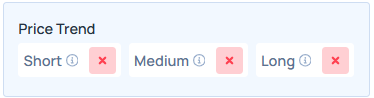
Benzinga edge rankings indicate SpaceX stock has a negative price trend across the short, medium, and long term.
Price Action: SPCX shares were trading 0.83% lower at $137.59 in pre-market trading on Tuesday.
Login to comment